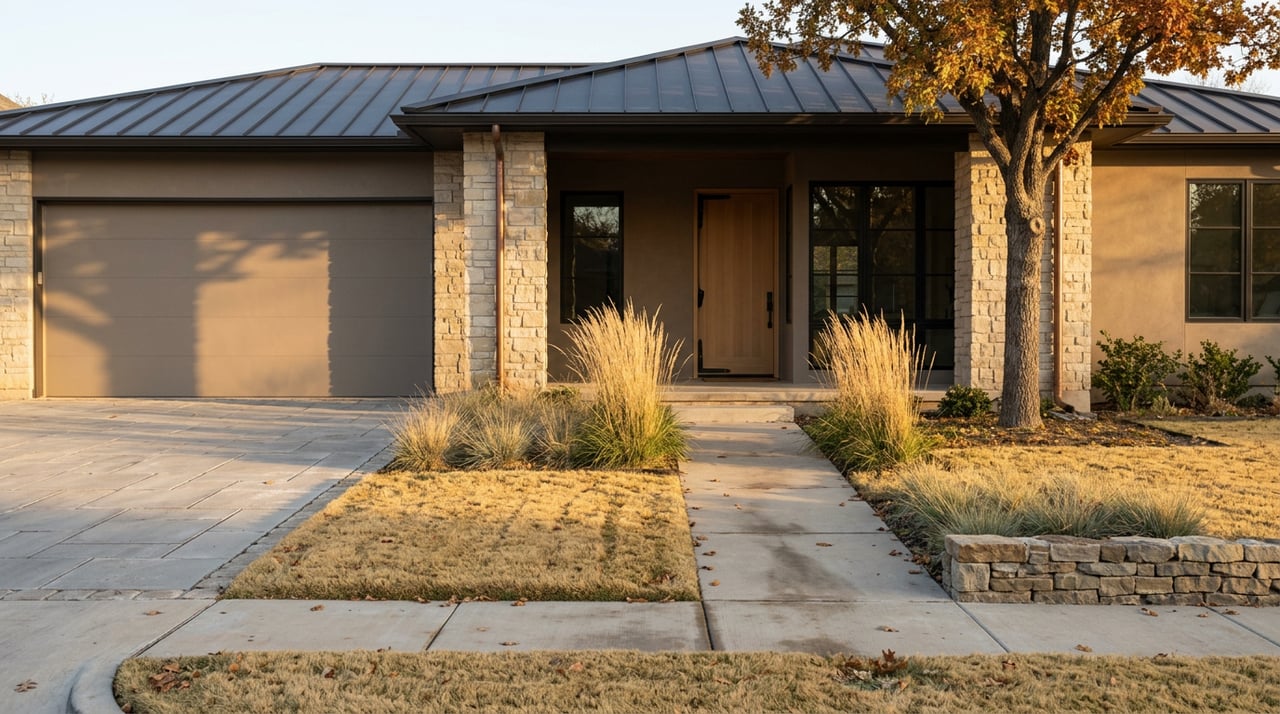
A remodeled kitchen in a 1948 Denver bungalow tells you almost nothing about the pipe running from that kitchen to the street.
That's the part of an older Denver home that gets skipped, not because sellers are hiding anything, but because nobody upgrades what a buyer can't see and an appraiser can't value. Quartz counters, refinished floors and a repainted exterior raise a home's price. A sixty-year-old sewer lateral doesn't show up in a listing photo, so it rarely gets touched until it fails. In neighborhoods like Park Hill, Washington Park, Capitol Hill, the Highlands and Hilltop, where the housing stock runs from the 1900s through the 1950s, that gap between the visible remodel and the buried original system is the single biggest thing a standard inspection can miss.
The Pipe That Predates Every Remodel Above It
Between the 1940s and the 1970s, a lot of Denver's sewer laterals were installed using Orangeburg pipe, a bituminous fiber material that was cheap and easy to work with at the time. It was never meant to last as long as it has. Decades past its intended lifespan, Orangeburg lines across the city are deforming into oval shapes that choke off flow, and the joints are failing in ways that let roots in. Denver's mature elm and maple canopy doesn't help. Tree roots are aggressive moisture seekers, and a cracked joint or a soft spot in an aging line is exactly the kind of opening they're built to find.
None of this shows up in a walk-through. A general home inspector isn't digging up a yard or running a camera down a sewer line as part of a standard inspection. That's a separate service, a sewer scope, and it typically runs $150 to $300. What it can catch is a line that's already bellying, root-clogged or collapsing, the kind of failure that otherwise surfaces as a backed-up drain six months after closing. Slow drains throughout the house at the same time, gurgling toilets when another fixture runs, or a patch of unusually green grass near the street are the visible warning signs before a scope ever confirms it. Replacing a full line runs $7,000 to $15,000 in most cases, and can push higher, toward $25,000, depending on depth and length. Against that spread, a $200 scope during the inspection period is not a rounding error. It's the whole negotiation.
A Panel Brand Name That Shows Up on Insurance Applications
The same visible-versus-buried split shows up in the electrical panel. Homes built before 1950 commonly still have knob-and-tube wiring somewhere in the system, and it's still legal, just considered a higher fire risk than modern wiring. What actually stalls a closing more often is the panel itself. Federal Pacific and Zinsco panels, both common installs through the 1960s and 70s, are known for breakers that fail to trip during an overcurrent event, which is the opposite of what a breaker is supposed to do. Some insurers decline to write a policy at all once they see either brand named on an inspection report. Upgrading to a modern 200-amp panel runs $2,500 to $4,000, and it's the kind of fix a lender or an insurer can force into the timeline even if the buyer and seller had already agreed to leave it alone.
The Kitchen Redone in PEX, the Hallway Still on Galvanized
Plumbing shows the pattern most clearly, because it's so common to find it half-finished. A kitchen remodel adds PEX supply lines to the two or three fixtures it touches, while the rest of the house keeps running on the original galvanized steel pipe, corroded from the inside and carrying less water pressure every year. Rust-colored water on first use of a tap, or noticeably weak flow at multiple fixtures, are the visible symptoms of a system that's been partially, not fully, brought current. A full re-pipe to PEX or copper runs $4,000 to $8,000 in a typical Denver bungalow. The point isn't that every older home needs this work today. It's that a remodel elsewhere in the house says nothing about whether this particular system was part of it, and the only way to know is to ask directly rather than assume.
What Denver's Clay Soil Does to a Prewar Foundation
Front Range soil, including most of central Denver, contains expansive clay that shrinks and swells as moisture levels change through the year. In an older foundation, that shows up as hairline cracks in drywall, doors that stick seasonally, or slight unevenness in older concrete, and in the overwhelming majority of cases it's cosmetic. It's also the kind of finding that's easy to either dismiss entirely or panic over, when the actual question is narrower: has the foundation moved enough to need engineered repair, or is this the normal seasonal flex that Denver's older housing stock has always done. A structural engineer's assessment, not a general inspector's opinion, is what actually answers that question, and it's worth getting when the cracking looks like more than hairline.
Checking What's Buried Before You Waive a Contingency
For anything built before roughly 1960, a single general inspector isn't really enough on its own. The more effective approach pairs a general inspection with two or three targeted specialists depending on what turns up: a sewer scope contractor as a default, and an electrician or structural engineer if the general inspection flags something in those systems. Each specialist runs a few hundred dollars, which is a small number set against a Denver purchase price. Once radon testing (Colorado sits in Zone 1, so it's a near-universal add-on), a sewer scope and any specialty inspection are stacked together, a full inspection budget on an older Denver home commonly lands between $900 and $1,200, compared with $400 to $600 for a simpler inspection on a newer property.
It's also worth checking Denver's permit records, searchable online by address, before getting deep into a contract. If a listing's finished square footage doesn't match what's on file, that's worth raising directly rather than assuming it will surface naturally during the inspection, because a general inspector isn't cross-referencing city permit history as part of a standard walk-through.
What Cheap Now Costs Later
| System | Check during inspection period | Cost if deferred |
|---|---|---|
| Sewer lateral | Sewer scope, $150–$300 | Full line replacement, $7,000–$15,000, up to $25,000 depending on depth and length |
| Supply plumbing | Visual inspection plus water pressure test | Re-pipe to PEX/copper, $4,000–$8,000 |
| Electrical panel | Panel brand and condition noted during inspection | Upgrade to 200-amp service, $2,500–$4,000 |
None of this is a reason to avoid an older Denver home. It's a reason to price the inspection period accurately. A seller who gets a sewer scope done before listing knows exactly what's negotiable and what isn't. A buyer who asks for one, even in a competitive offer, is treating it the way most listing agents already do: as a routine diligence step, not a renegotiation tactic. That's very different from waiving the inspection contingency altogether and finding out what's buried after the closing has already happened.
A Few Questions Worth Asking Before You Waive Anything
If a home has already been remodeled, does that cover the buried systems too? Not automatically. A remodel typically touches what's visible and what adds resale value, like a kitchen or a bathroom. The sewer lateral, the rest of the wiring, and any plumbing outside the remodeled area are frequently left exactly as old as the house.
Is Orangeburg pipe only a concern in the oldest, Victorian-era neighborhoods? No. It was installed widely from the 1940s through the 1970s, so it shows up in mid-century construction across Denver, not just in the pre-1920 housing stock.
Can I still request a sewer scope if I'm in a multiple-offer situation? Generally, yes. Sellers and their agents tend to treat a sewer scope as a distinct, reasonable diligence item, which makes it easier to keep in an offer even when other contingencies are being trimmed to compete.
If you're weighing an inspection report on an older Denver home right now, or getting one ready to list, The Denver Trio can walk through it with you line by line and help you sort what's a real negotiating point from what's just part of owning a house this age.
This article is general information, not legal, tax or financial advice. Consult a qualified professional about your situation.